Picture this: your systems go down on a Tuesday morning. At first, it feels like a minor glitch. A slow loading screen or a timed-out login. Within minutes, whispers start traveling across the office floor. The CRM is inaccessible and the shared drives are empty. A cold realisation settles into you as you realise this isn’t a routine update.
In cybersecurity, we call the first sixty minutes following a crash the “Golden Hour.” Much like in emergency medicine, the actions taken during this window determine whether the organisation survives the trauma or bleeds out over the coming weeks.
The stakes for managing this window correctly are much higher than in the past. Across Asean countries like Singapore, Malaysia, Thailand and Indonesia, about 46% or organisations were reported to experience high-impact outages at least once per week. Perhaps, even more concerning is that 1% of firms in the region faced such outages multiple times per day. When failure is this frequent, the ability to execute ransomware recovery is not just a niche IT skill but a fundamental requirement for business continuity. If you are not prepared for that first hour, you are not just losing time. You are losing the ability to control the narrative of your own survival.
Immediate confusion and lack of clarity
When the lights go out, the first thing to vanish is not actually the data, but the clarity of leadership. In some organisations, there is an immediate vacuum of ownership. Does the responsibility lie with the IT manager, the security officer, or the chief operations officer? Without a pre-defined “incident commander”, multiple teams begin reacting at once, and usually in ways that contradict one another. Imagine you have the infrastructure team trying to reboot servers while the security team is screaming to keep them isolated for forensics. Too chaotic, right?
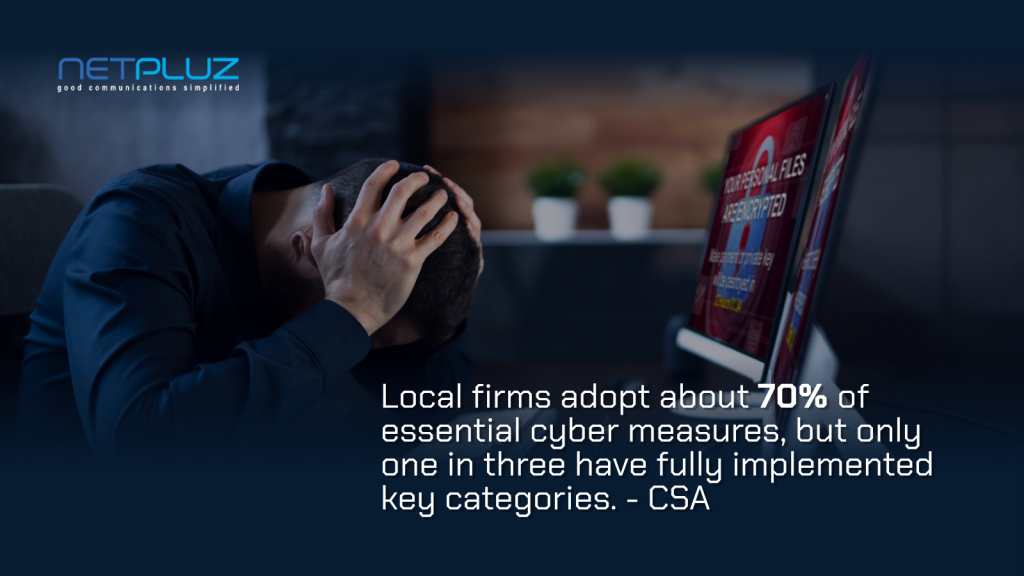
This fragmented response is a direct result of incomplete preparation. The CSA’s Singapore Cybersecurity Health Report 2023 reveals that local firms adopt about 70% of essential cyber measures, but only one in three have fully implemented key categories. This suggests that while most companies have the “parts” of a security plan, they lack the cohesive implementation needed to function during a crisis. With no single source of truth, the first hour is wasted on internal debates rather than active containment. Everyone is looking for a manual that has not been updated in years, leading IT folks to be on a “detective more” that yields more questions than answers.
The high-stakes race to diagnose the problem
Once the initial shock wears off, the IT department goes into a frantic search of the root cause. This is a dangerous phase for ransomware recovery because every minute spent diagnosing is a minute the infection has to spread deeper into the network. The pressure to “just get back online” often leads to hasty decisions that can accidentally destroy evidence or worse, trigger a more aggressive encryption routine from the attackers.
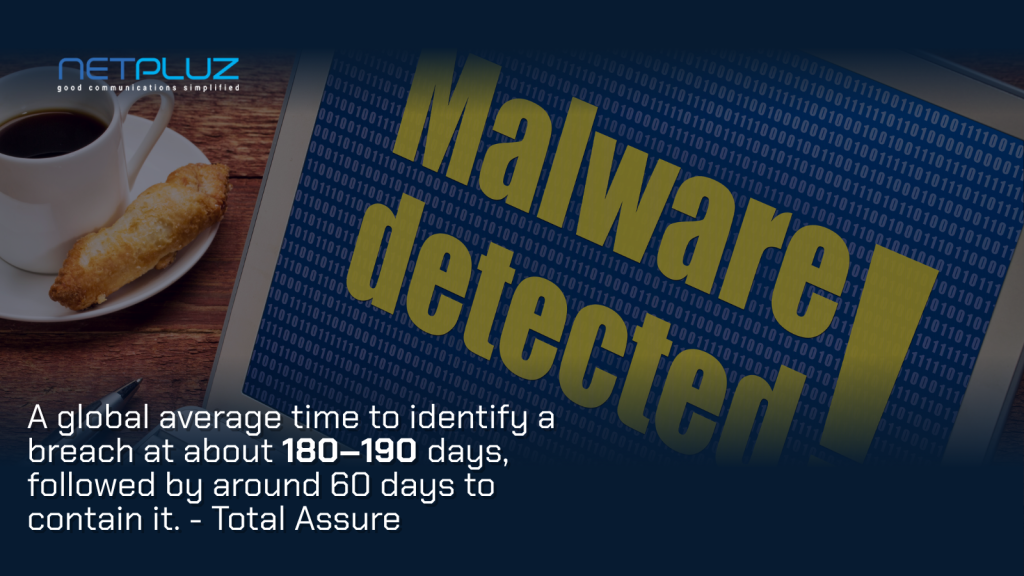
The timeline for this detection is, historically speaking, quite bleak. Industry data shows a global average time to identify a breach at about 180–190 days, followed by around 60 days to contain it. This indicates that many organisations, including those across Asia, still respond very slowly to active threats. Just think about it like this: If it takes six months to realise someone is in your house, the “first hour” of the actual system failure is really just the final stage of a much longer, silent disaster. Misalignment between detection tools and human response slows the process down to a crawl, turning what should be a sprint into a sluggish walk through the digital fog.
Communication break downs and the escalation of panic
So of course, the technical teams are buried in code and logs, the rest of the business is beginning to spiral. And this is where the misalignment between business and IT becomes a secondary crisis. Leadership teams would naturally want updates every ten minutes, but the IT team would usually has no concrete answers to give just yet. When communication channels are not strictly defined, people start using unofficial ones (e.g. Whatsapp groups, personal emails, or even verbal rumours) which only serve to spread misinformation and panic.
Communication is frequently the first thing to break under pressure. At least about 60% of organisations globally experience cyber incidents where poor or broken communication plays a contributing role, either in causing the incident or in making the impact worse through delays and missed containment. When a ransomware recovery effort is hindered by bad communication, the damage will definitely intensified. Just think about a simple technical fix that was overshadowed by a PR nightmare, or worse, a loss of customer trust simply because the right people weren’t told the right things at the right time. Panic escalates when there is a silence from the basement, leading to knee-jerk reactions from the executive suite that can complicate the legal and insurance aspects of the breach.
The first hour isn’t managed, it is survived
We always like to think that a crisis will bring out the best in our teams, but the reality of a system failure is actually far messier. The first hour is not usually a display of precision, but a struggle for survival. The chaos you experience in that “Golden Hour” is not a reflection of a lack of effort from your staff. In fact, most teams work harder during that hour than at any other time in their careers. The chaos is actually just an indication that your organisation is not fully prepared when ransomware strikes.
A successful ransomware recovery isn’t built in the heat of the moment. It is built months in advance through rigorous testing and clear-headed strategy. If you wait until the servers are dark to find out who is in charge, you have already handed the advantage to the attackers. Keep in mind that the organisations that survive are the ones that recognise that the first hour is a psychological battle as much as a technical one. They are the ones who have traded the “illusion of readiness” for the hard work of actual resilience.
The question every leader needs to ask is simple: If the clock started ticking right now, would your team know exactly what to do in the next sixty minutes? Or would they be part of the 60% who let communication breakdowns turn a manageable incident into a total disaster. The ransomware recovery process only works if you have a foundation to stand on when the ground starts shaking.
You can further explore your own readiness here
The distance between surviving a crisis and being overwhelmed by it is often just a single conversation. Don’t wait for the “Golden Hour” to start to realise you don’t have a plan.
Test your readiness before the clock starts. Book your Cybersecurity Time-Out Clinic today and find your gaps before the hackers do.